Dynamics & Fabrication Case Study
How Fast Can You Move a Bar That Wants to Fall Over?
The assignment: carry a free-standing 1 × 12 inch vertical bar across the floor, 10 feet in testing and 7 in competition, as fast as possible without letting it topple. The whole project hangs on one number, the acceleration at which the bar tips.
Physics First
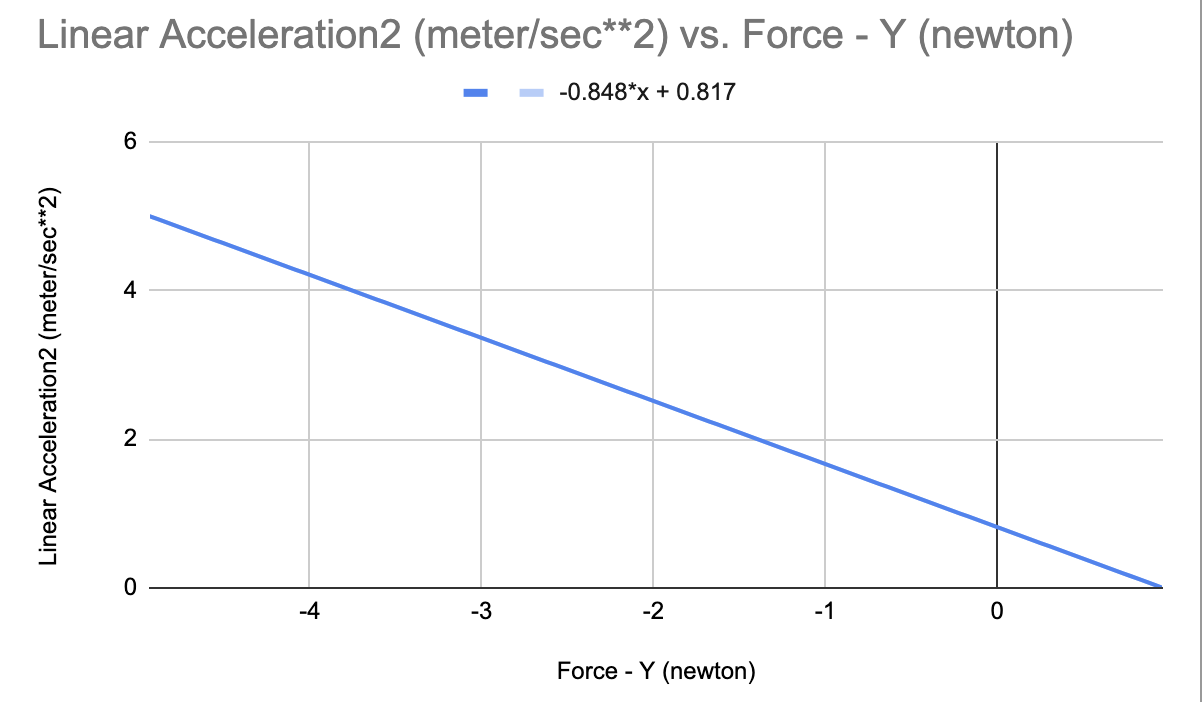
Before designing a single part, we found the ceiling on performance. Hand analysis of the tipping moment gives a critical acceleration of g/12, about 0.8175 m/s². Accelerate harder than that and the bar rotates over its trailing edge. A motion simulation of the same scenario returned 0.817 m/s².
Two independent methods landed on the same number to three decimal places. That agreement let us design the rest of the cart with confidence. The motor control just has to stay under the limit, and every bit of unused margin below it is wasted race time.
Then the Hardware
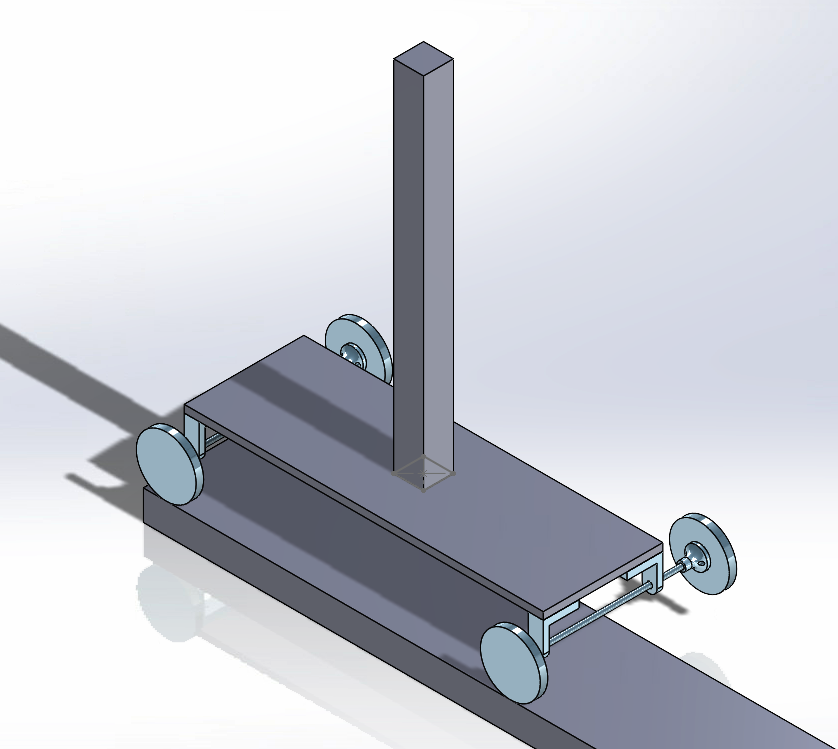
We designed and fabricated eight custom parts: the main body, axles and spacers, wheels and their attachments, body-to-axle connections, and a motor holder. The motor hangs below the body and drives the 1.5-inch wheels through a timing belt and pulleys, turning motor speed into controlled floor speed.
None of these parts are glamorous, and that's sort of the point. The physics set the target, and the hardware's only job was to hit it repeatably.
The Parts
Each custom component, modeled in SolidWorks before fabrication. Click any of them for a closer look.
What I Learned
- Find the governing constraint before designing anything. Here, one acceleration number defined the entire performance envelope.
- Cross-checking simulation against a hand calculation is cheap insurance. When the two agree, you can move quickly.
- Speed competitions are won in the boring details: belt tension, wheel diameter, and a motor mount that doesn't flex.